Skip to content
PrioryPark Locksmith ServicesOpen 24/7 (226) 770-4114
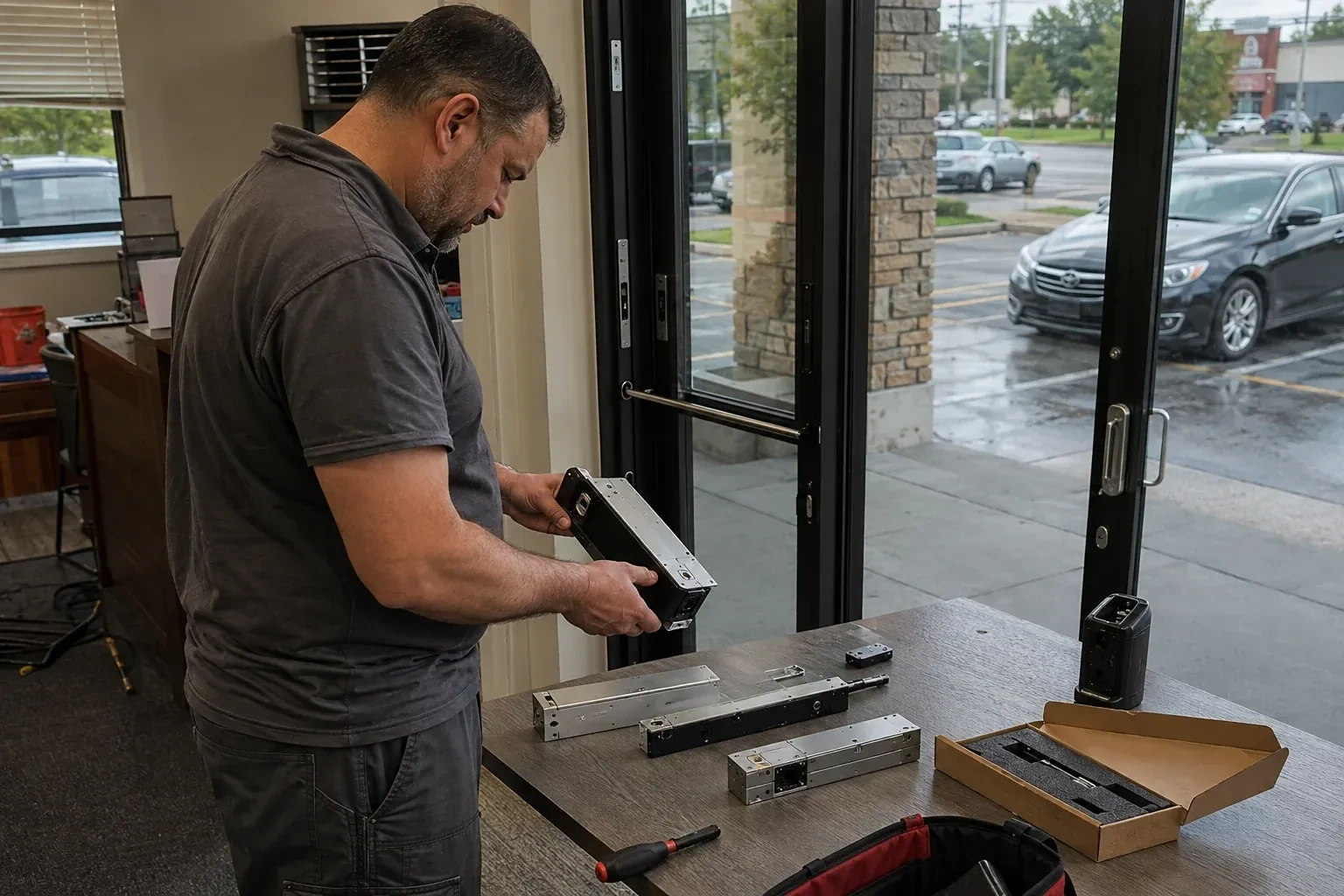
Person holding a rectangular door-hardware housing at a table with additional metal assemblies beside a glass entrance. — Access Control Installation, Guelph

Commercial · Guelph

Access Control Installation

The keypad on the side door has started sticking on cold mornings, codes get shared instead of reset, and half the staff still remember a code you meant to retire two hires ago.

In plain words

The installation is not finished when the last door is wired; it is finished once the business can run the system without the locksmith standing there. That means an administrator account handed over with full control, a walkthrough of adding and revoking credentials, pulling an entry log, and changing a schedule for a holiday or an event. Beyond that point, whether the installer keeps any support or maintenance access is a setting the business chooses at handover rather than something assumed either way, and every routine change to who can enter is the business's own decision.

Sound familiar?Guelph

The call
Another employee left and the keys never came back. You changed the locks again, cut copies for everyone who stayed, and paid for a job that repeats itself the next time someone quits, taking a working key out the door with them.
NextHow the visit goes

Access Control Installation · Guelph

How the visit goes

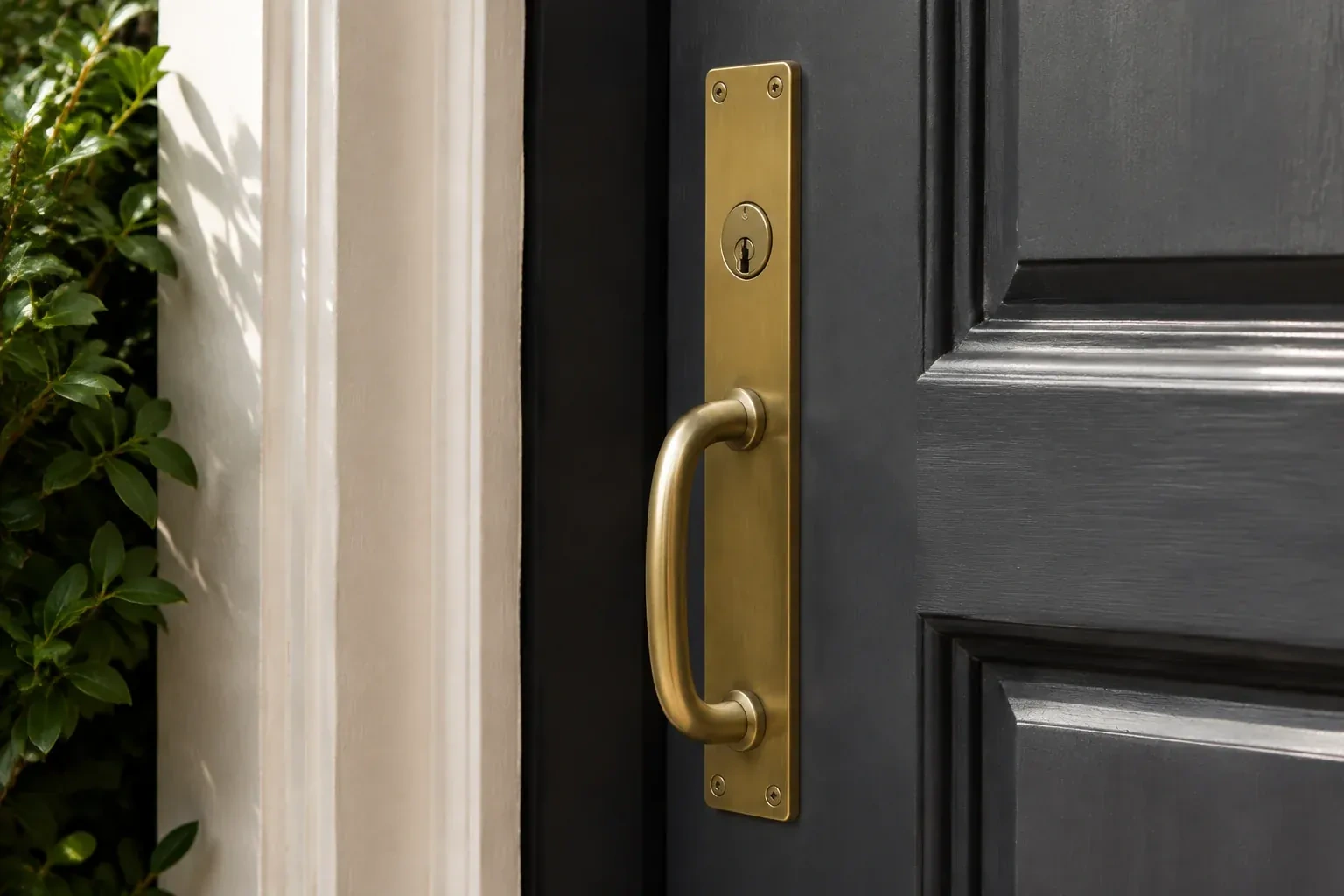
Brass pull handle on a long rectangular plate with a keyhole, mounted on a black paneled door beside a white frame.
  1. Scene 1

    Checking the network before relying on it

    A networked controller usually needs a live network connection to report events and accept schedule changes, so where that option is on the table, the survey includes a look at the building's existing network: is there a switch port near where the controller will sit, does the building's technology policy allow another device on the network, and does a networked system suit the business better than several standalone readers that need no network at all. Answering this before ordering hardware avoids discovering, midway through the job, that the simpler standalone option was the better fit all along.

  2. Scene 2

    Wiring the openings back to a controller

    Each controlled opening can send and receive several signals: a reader reporting a presented credential, a lock output that releases the hardware, and, where the configuration calls for them, a door position switch reporting open or closed and a request-to-exit input. The locksmith runs the wiring from each opening back to wherever the controller is mounted — as a home run, along a shared bus, or over the network on an IP or PoE device — labels each conductor at both ends, and terminates them into the controller's input and output boards. A building with several openings may share one power supply and battery backup sized to the combined load, or split the load across more than one supply.

  3. Scene 3

    Reading the entry log

    Every controller keeps a record of which credential was presented at which door and when, and, where a door position switch is fitted, whether the door actually opened; that log is available to the administrator whenever it is needed, not only after something has gone wrong. Pulling a recent day's entries for the stockroom, checking whether the loading dock was opened outside its scheduled window, or confirming a contractor's credential was only used on the days they were on site are ordinary lookups rather than a special request, though the record shows the credential used rather than proof of who held it. Reviewing the log occasionally, rather than only when there is a problem, is a genuinely useful habit.

In the van

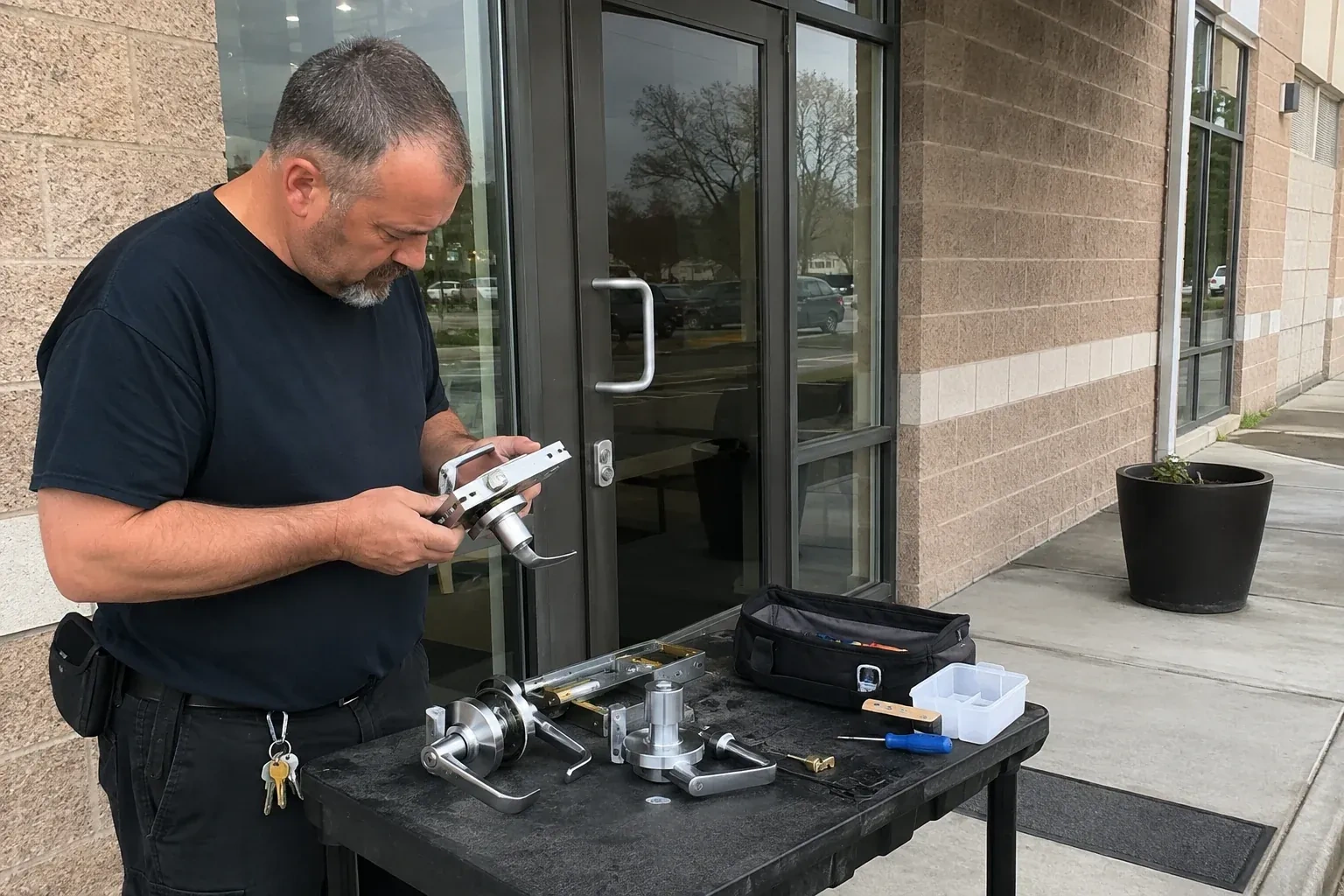
  • Magnetic locks
  • Mechanical override cylinders
  • Keypad readers
  • Electric strikes
  • Card and fob readers

What shapes the quotePriory Park Locksmith Services

Fitting the mechanical override
Keying an override cylinder into the same system as the rest of the property's keys, rather than leaving it as an unrelated spare lock, takes coordination with whatever keying already exists across the building.
How many credentials and what type
Cards, fobs, keypad codes and mobile credentials each involve different issuing steps, and a system enrolling a handful of managers is a shorter task than one enrolling an entire staff across several shifts.
How many schedules and access levels are needed
A building with one schedule for everyone is quicker to configure than one splitting doors, hours and roles into several access levels, since each combination has to be set up and then tested on its own.

FeesSame any hour

Have it ready

Before you call · 0 / 3

(226) 770-4114

Straight answers

What happens to the doors if the power goes out?

Outage behaviour depends on how that opening was built: battery backup can be sized to carry the reader, the lock and the controller through a typical outage, so a brief power loss need not lock anyone out or, on a fire-alarm-tied opening, lock anyone in, but that backup and any mechanical key override are specified per opening rather than assumed for every door. Fail-safe hardware unlocks once power has been out longer than the backup lasts; fail-secure hardware stays locked, and what opens it depends on the hardware chosen.

What's the difference between a standalone and a networked system?

A standalone unit is a self-contained reader and lock at one door, holding its own list of credentials, though it can still need a power or network connection to run. A networked system ties several doors to shared management, sometimes through more than one controller, aggregating schedules and combining logs across all of them. The right choice depends on how many doors need controlling and whether the business wants a single place to manage all of them, rather than one being universally better.

What credential types are available: cards, codes, fobs, phones?

A proximity card or fob held near a reader, a code typed on a keypad, or a mobile credential read from a phone are all in common use, and a single building can mix them by door or by person. Cards and fobs are simple to issue and switch off individually; a keypad needs no card to lose but a shared code eventually gets passed around; a mobile credential ties entry to a device the person already carries.

Guelphinformation

WellingtonOntario

Access Control Installation · Guelph/Eramosa, Puslinch, Priory Park, Everton

Town
Guelph, Wellington
In business
11 years
Hours
Open 24/7
Nights, weekends and holidays, same fees
Visits
On-site assessment preferred. Request a visit or call.

2021 census: what it means at the door

Every square is one home in a hundred.

  • 44 in 100 homes · mixed ages
  • About 44% of homes in Guelph were built in 1980 or earlier, according to the 2021 Census.Where housing is mixed, doors that have been replaced sit beside doors that never were. A new door in an old frame, or an old door in a repaired frame, needs its strike and hinges checked together so the whole assembly works as one.
  • Single-detached houses make up about 49% of homes in Guelph (2021 Census).Where housing types are mixed, the same lost-key call means different things. In a house, rekey every door on the property. In an apartment, rekey the suite door and check with management about the common entrance. The locksmith asks which it is first.

Source: Statistics Canada, Census Profile

Open Guelph in Google Maps

On-site assessment

Request a visit.

The keypad on the side door has started sticking on cold mornings, codes get shared instead of reset, and half the staff still remember a code you meant to retire two hires ago.

(226) 770-4114, open 24/7.